Introduction
In today’s fast-moving fabrication world, flexibility is everything. Shops no longer want machines that do just one job—they want tools that adapt, evolve, and boost productivity. That’s where the fiber tabletop laser welder and handheld welder in one steps into the spotlight.
Imagine switching from ultra-precise bench welding to free-hand repair work without changing machines. Sounds efficient, right? This hybrid laser welding system from Varisigns is reshaping how metalwork is done across industries like signage, automotive repair, and precision sheet metal fabrication.
Let’s break it down in a simple, practical way.
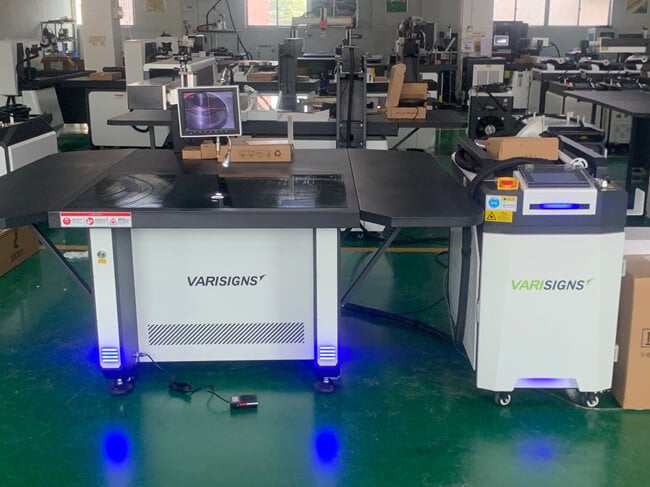
What Is a Fiber Tabletop Laser Welder and Handheld Welder Combo?
Core Concept of Dual-Mode Laser Welding
At its core, this machine combines two welding styles in one system:
- A tabletop precision welding mode with CCD for detailed, fixed-position work
- A handheld welding mode for flexible, real-world applications
It uses a fiber laser source that delivers high-energy beams capable of welding metals like stainless steel, aluminum, and carbon steel with extreme accuracy.
Why Manufacturers Are Shifting to Hybrid Systems
Why buy two machines when one can do both jobs?
That’s the mindset driving adoption. Fabricators want:
- Faster workflows
- Lower equipment costs
- Smaller workshop footprints
- More adaptability in production
This hybrid machine checks all those boxes.
How the Dual-System Laser Welder Works
Tabletop Precision Welding Mode
In tabletop mode, the laser head is fixed. The operator places parts on a stable workbench, allowing for:
- Micro-precision welding with a CCD camera
- Repetitive production tasks
- Clean, consistent weld seams
It’s like turning your workspace into a high-precision laboratory.
Handheld Flexible Welding Mode
Switch to handheld mode, and the machine transforms.
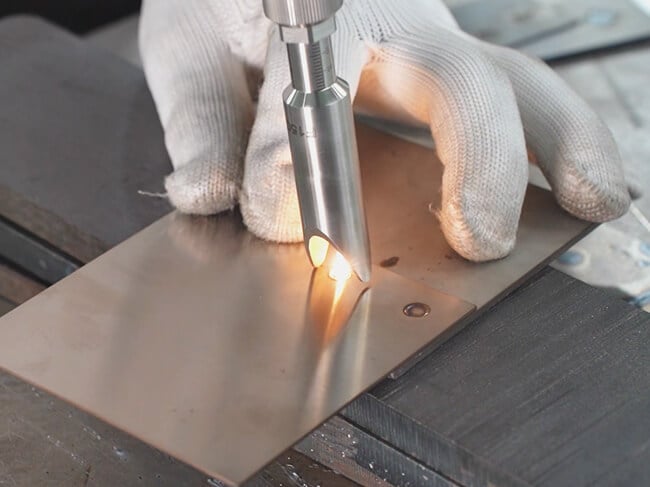
Now you have a portable laser gun that allows:
- On-site welding
- Large structure repair
- Complex angles and hard-to-reach joints
Think of it as a welding “wand” you can take anywhere.
Switching Between Modes Seamlessly
Most modern systems allow quick switching through:
- Touchscreen controls
- Plug-and-play laser heads
- Auto-adjusted power settings
No downtime. No complicated recalibration.
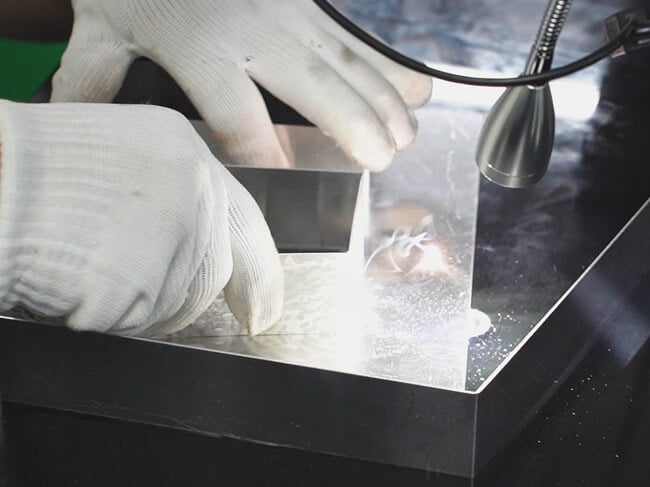
Key Features of a 2-in-1 Fiber Laser Welding Machine
High-Power Fiber Laser Source
The heart of the machine is its fiber laser generator. It delivers:
- High beam density
- Deep penetration welding
- Stable long-term performance
This ensures strong, clean welds every time.
Smart Control System
Modern systems come with intuitive interfaces that allow:
- Power adjustment
- Speed control
- Mode switching – welding, cutting, and cleaning
- Memory presets for jobs
Even beginners can get the hang of it quickly.
Cooling and Safety Mechanisms
Because laser welding generates heat, these systems include:
- Water cooling units
- Overheat protection
- Laser shielding systems
- Safety interlocks
Safety isn’t optional—it’s built-in.
Advantages of Combining Tabletop and Handheld Welding
Increased Productivity
One machine, two workflows. You can:
- Fabricate in the workshop
- Move directly to on-site repair
- Reduce machine switching time
That’s real productivity gain.
Versatility for Different Materials
This hybrid system handles:
- Stainless steel
- Aluminum
- Carbon steel
- Galvanized materials
- Other metal alloys
It’s like having a universal welding passport.
Space and Cost Efficiency
Instead of buying separate systems, businesses:
- Save workshop space
- Reduce equipment investment
- Lower maintenance costs
Small shops especially benefit from this.
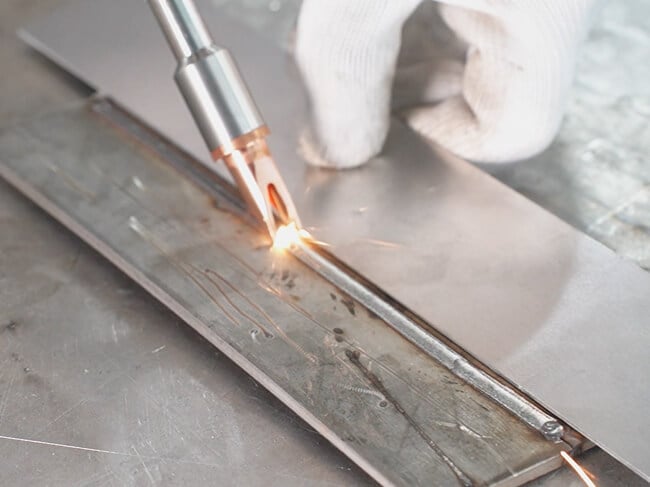
Applications Across Industries
Signage and Channel Letter Fabrication
This is a huge one. Sign makers use it for:
- Channel letter welding
- Thin metal assembly
- Precision lettering joints
Clean welds mean cleaner signage.
Automotive and Metal Fabrication
From body repairs to frame work:
- Car panels
- Exhaust systems
- Structural joints
It delivers speed and precision where it matters.
Stainless Steel and Aluminum Work
Industries using stainless steel kitchens, elevators, or decor benefit from:
- Smooth weld finishing
- Minimal post-processing
- Strong corrosion-resistant joints
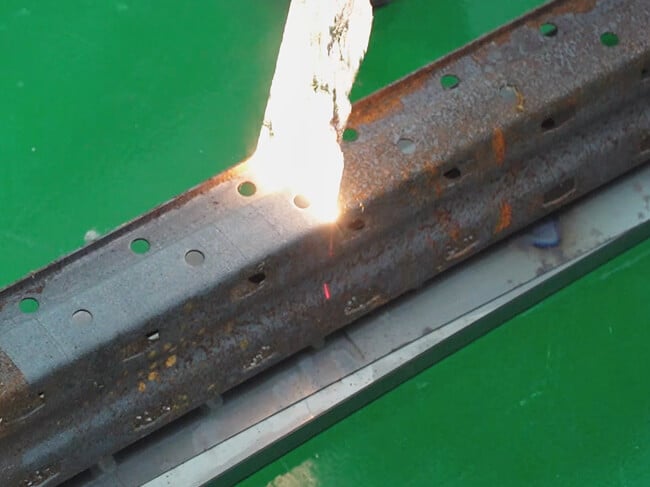
- Highly efficient rust removal capability
Tabletop Mode: Precision for Delicate Work
Micro-Welding Capabilities
Tabletop mode excels in fine-detail welding like:
- Jewelry parts
- Electronic components
- Thin sheet metals
- Tiny stainless steel letters production
Thanks to the integration of a CCD camera, it achieves microscopic precision that handheld welding mode cannot match.
Ideal Use Cases
Perfect for:
- Factory production lines
- Repetitive small parts
- High-precision assemblies
If precision is everything, this mode wins.
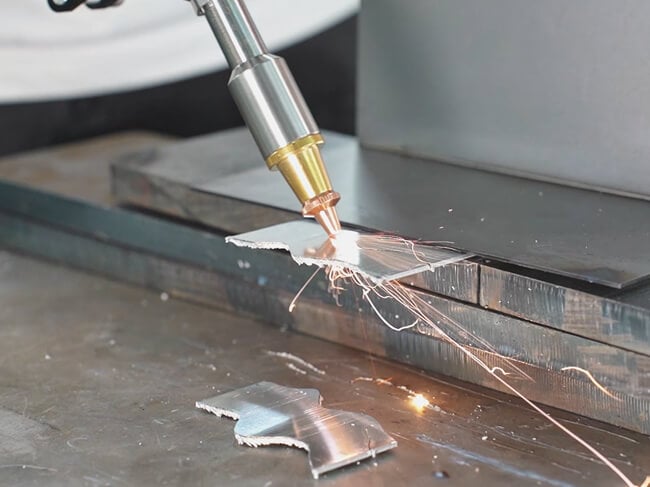
Handheld Mode: Freedom and Flexibility
On-Site Welding Advantages
Need to fix a large structure?
No problem. The handheld mode allows:
- Outdoor repairs
- Construction welding
- Heavy machinery maintenance
No need to move materials to a workshop.
Repair and Maintenance Work
It shines in:
- Emergency fixes
- Structural adjustments
- Retrofit jobs
You bring the welder to the problem—not the other way around.
Tabletop vs Handheld: Which One Should You Use?
The answer is simple: both.
- Use tabletop for precision and repetition
- Use handheld for flexibility and mobility
Together, they eliminate workflow bottlenecks.
Buying Guide: What to Look for in a Hybrid Laser Welder
Power Levels and Output Stability
Look for machines offering:
- Stable laser output
- Adjustable wattage
- Consistent beam quality
More power isn’t always better—control matters.
Ease of Switching Modes
A good machine should offer:
- One-click switching
- Smart presets
- Minimal downtime
Time is money in fabrication.
Ergonomics and Design
Don’t overlook:
- Comfortable handheld grip
- Intuitive interface
- Compact tabletop layout with folding
User comfort improves long-term efficiency.
Maintenance and Safety Tips
To keep your machine running smoothly:
- Clean lenses regularly, especially the protective lens
- Check the cooling systems if it work properly
- Avoid dust exposure
- Use protective eyewear
- Follow manufacturer guidelines
A well-maintained machine lasts years longer.
Future of Dual-Function Laser Welding Technology
The future is heading toward:
- AI-assisted welding control
- Fully automated mode switching
- Smarter energy optimization
- Integration with robotic systems
In short, welding is becoming smarter, faster, and more automated.
Conclusion
The fiber tabletop laser welder and handheld welder in one is more than just a machine—it’s a workflow revolution. It gives fabricators the precision of a lab system and the freedom of a portable tool in one compact unit.
Whether you’re working on signage, automotive repairs, or industrial fabrication, this hybrid system helps you work faster, smarter, and more efficiently.
The future of welding isn’t just powerful—it’s flexible.
FAQs
1. What materials can a fiber tabletop and handheld laser welder handle?
It can weld stainless steel, carbon steel, aluminum, and other metal alloys with ease.
2. Is it difficult to switch between tabletop and handheld modes?
No, most systems allow quick switching through a simple control interface.
3. Can beginners use this type of laser welder?
Yes, modern machines include smart controls that make operation beginner-friendly.
4. Is handheld laser welding safe for on-site work?
Yes, as long as proper protective gear and safety guidelines are followed.
5. What industries benefit most from this hybrid system?
Signage, automotive repair, metal fabrication, and precision manufacturing benefit the most.