Introduction
Starting or expanding a sign-making business involves plenty of decisions. One of the biggest? Choosing the right channel letter bending machine without overstretching your budget.
If you’re comparing equipment, you’ve probably noticed that machine specifications, automation features, and production capabilities vary considerably. So, how much should you invest? And more importantly, how can you tell whether a machine offers real value for your business?
The answer goes beyond the initial purchase price.
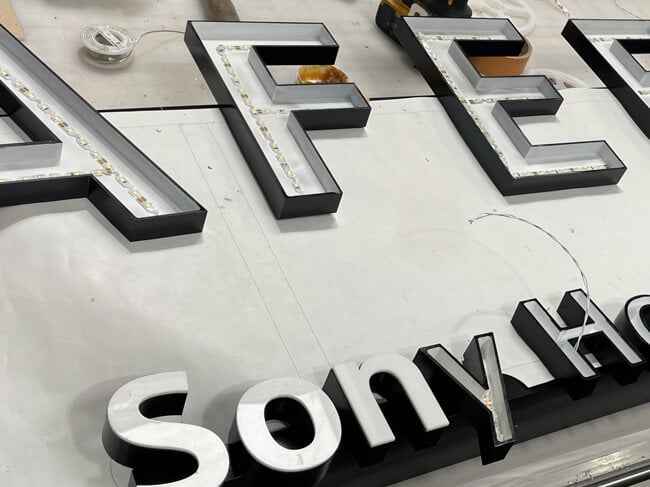
A channel letter bending machine helps sign manufacturers produce accurate metal returns for illuminated letters, storefront signs, and custom signage. Depending on its capabilities, the equipment can automate feeding, slotting, notching, flanging, bending, and cutting operations.
The right system can reduce repetitive manual work, improve production consistency, and help your team complete more orders. However, buying a machine with unnecessary features can tie up capital you could use elsewhere.
In this guide, we’ll explore the factors affecting channel letter bending machine cost, explain how to compare equipment, and show you how to evaluate its potential return on investment.
Let’s get started!
What Is a Channel Letter Bending Machine?
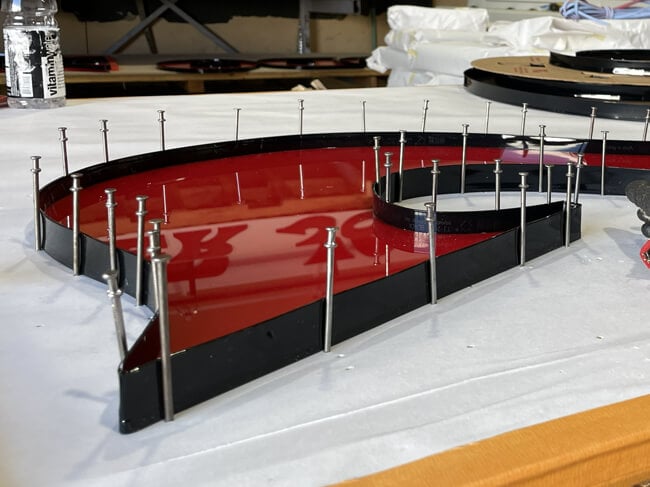
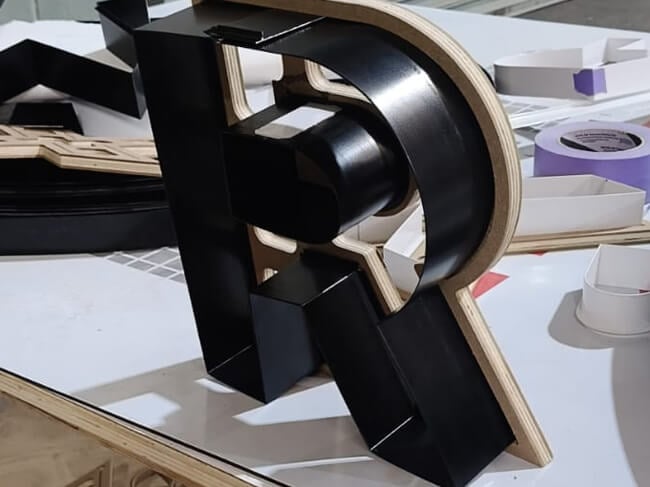
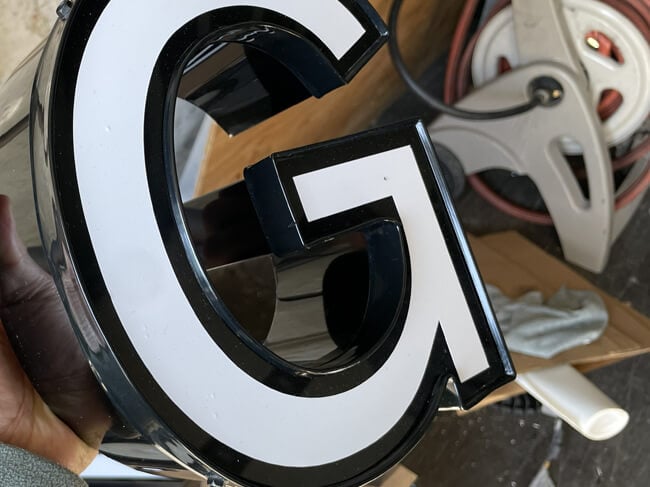
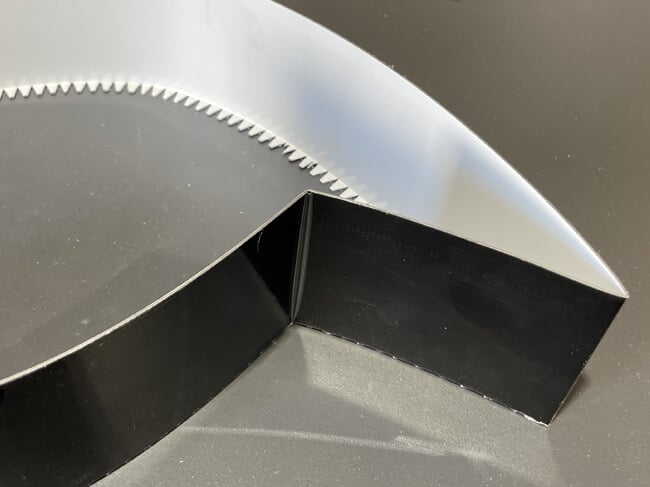
A channel letter bending machine is specialized equipment that forms metal strips into the sides, or returns, of three-dimensional channel letters.
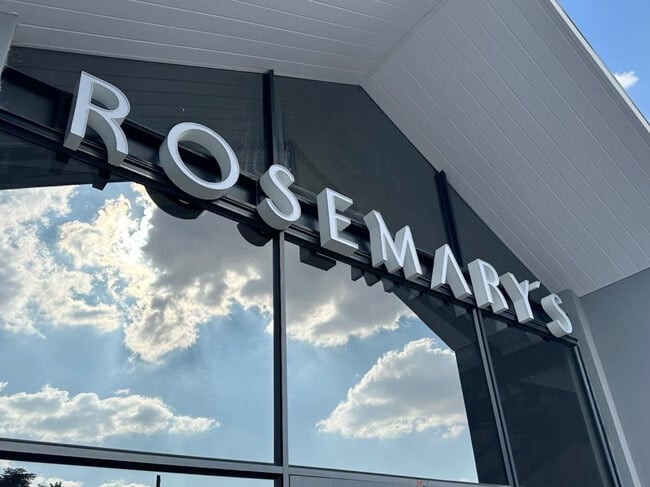
These letters commonly appear on illuminated storefront signs, retail displays, commercial buildings, and corporate signage.
Traditional fabrication requires operators to measure, cut, notch, and bend metal strips manually. Although experienced fabricators can produce excellent results, the process is time-consuming and depends heavily on operator skill.
An automatic channel letter bender streamlines these operations through programmed controls and mechanical forming systems.
Depending on the model, the machine may offer:
- Automatic material feeding.
- Programmable bending operations.
- Automatic notching and slotting.
- Flanging for specific letter constructions.
- Cutting or milling functions.
- CAD file compatibility.
- Adjustable processing parameters for different materials.
These features influence both the purchase price and the machine’s suitability for your workshop.
Before comparing quotations, identify the operations you want to automate. Doing so helps you avoid paying for capabilities your business rarely uses.
How Much Does a Channel Letter Bending Machine Cost?
There isn’t one universal price for a channel letter bending machine. Manufacturers configure their equipment for different materials, production volumes, and fabrication requirements.
A basic machine for straightforward applications generally requires less investment than a sophisticated system for demanding production environments.
For budgeting purposes, divide the market into three broad categories.
1. Entry-Level Channel Letter Bending Machines
Entry-level machines suit smaller sign shops that want to bring metal bending in-house without immediately investing in a high-capacity production system.
Depending on the configuration, these machines may offer basic bending functions and limited automation. For example, Varisigns VAM-S1 and VAM-S3: the VAM-S1 is for sign shops that only make aluminum letters, while the VAM-S3 is for shops that make both steel and aluminum letters, but only very simple letters.
They’re worth considering if your business:
- Produces a relatively small number of channel letters.
- Primarily works with one type of material.
- Has a limited equipment budget.
- Wants to reduce reliance on outsourced fabrication.
- Can accommodate some manual preparation and finishing.
However, a low initial price doesn’t automatically mean lower overall costs.
If the machine requires considerable operator involvement, labor expenses may remain high. Check how much manual work each production cycle requires before making a decision.
2. Mid-Range Automatic Channel Letter Bending Machines
Automatic machines offer a practical balance between investment and production efficiency for many established sign manufacturers.
Depending on the model, automated functions may include material feeding, bending, notching, and cutting. For example, the Varisigns VAM-S6 and VAM-S6 Plus can bend letter thickness up to 200 mm, and the S6 Plus can bend different styles of aluminum profiles; it also handles 2 mm-thick aluminum.
These capabilities can reduce repetitive tasks and help operators produce more consistent results.
A mid-range automatic system may suit your business if you:
- Receive regular channel letter orders.
- Want to shorten production lead times.
- Need repeatable bending accuracy.
- Plan to expand your customer base.
- Want to reduce labor requirements per job.
When comparing machines in this category, look at the full processing workflow, not just the number of automated functions.
A machine that combines the operations you actually need may provide better value than a more expensive system with features your team rarely uses.
3. Industrial Channel Letter Bending Machines
Industrial systems target businesses with demanding production schedules, broader material requirements, or more complex fabrication needs.
Depending on the configuration, they may provide advanced controls, specialized forming mechanisms, higher production capacity, and support for multiple metal types or functions for V-notch and flange back, like the Varisigns model VAM-S18; or, if you want to bend thicker aluminum up to 3mm, then you can go with the model VAM-S40.
These systems can be attractive to large sign manufacturers and workshops producing channel letters at scale.
However, their higher investment only makes sense when your production requirements justify it.
Before committing to an industrial machine, consider your average order volume, peak-season workload, staffing, available floor space, and expected business growth.
Important buying tip: Request a quotation based on your actual production requirements. General price comparisons can be misleading when machines differ in configuration, included accessories, software, warranty, and delivery terms.
Seven Factors That Influence Channel Letter Bending Machine Cost
Understanding the main pricing factors helps you compare quotations more accurately.
1. Automation Level
Automation is an important consideration when evaluating channel letter bending machine prices.
A machine that requires operators to position, measure, and form each strip manually may cost less initially. However, it also demands more hands-on labor.
An automatic system can perform multiple operations using programmed instructions, depending on its design.
This reduces repetitive work and may improve production consistency.
Before paying for additional automation, identify your biggest bottlenecks. If manual notching consumes much of your production time, an integrated notching system may offer more value than a feature unrelated to your workflow.
2. Material Compatibility
The materials you process affect machine design, configuration, and price.
Common channel letter materials include aluminum and stainless steel. Some applications also involve galvanized metal or other suitable materials.
Different metals behave differently during forming. Thickness, hardness, strip dimensions, and desired bending radius all influence the processing requirements.
Ask manufacturers to confirm:
- Which materials the machine supports.
- The permitted material thickness range.
- The supported strip heights and dimensions.
- The minimum achievable bending radius.
- Whether different materials require separate tooling or adjustments.
Don’t assume that a machine can process every metal simply because its software supports multiple material settings.
Whenever possible, ask the supplier to demonstrate the machine using samples that match your actual production materials.
3. Bending Accuracy and Forming Quality
Precision matters when producing professional channel letters.
Poorly formed returns can create gaps, inconsistent corners, and alignment problems during assembly. These defects may require additional adjustment or rework.
A suitable machine should produce returns that match your intended letter designs and fabrication methods.
When evaluating accuracy, consider the following:
- Repeatability across multiple production runs.
- Performance on tight curves and small letters.
- Consistency across different strip thicknesses.
- Compatibility with your letter faces and backs.
- The amount of manual finishing required after bending.
Ask for sample letters featuring straight sections, sharp corners, and curved shapes.
These examples provide a more useful picture of real-world performance than a specification sheet alone.
4. Notching, Slotting, and Flanging Functions
Integrated processing functions can affect both equipment cost and productivity.
Notching and slotting create the reliefs needed for certain bending operations. Flanging forms an edge that supports particular channel letter construction methods.
When these operations are automated, operators spend less time manually preparing strips.
However, not every sign shop needs the same capabilities.
If your orders mainly involve straightforward aluminum letters, a simpler configuration might be sufficient. If you regularly produce complex shapes or work with different materials, additional functions may justify the higher investment.
Compare the functions available on each machine and choose the ones that directly support your products.
5. Software and Design Compatibility
Software influences how easily your team moves from a finished letter design to a production-ready metal return.
Many modern machines support design files such as AI or DXF, depending on the control system.
Before purchasing, confirm the machine supports your existing design workflow.
Check whether the quotation includes:
- Control and bending software.
- A computer, if required.
- Supported file formats.
- Installation and configuration.
- Operator training.
- Software updates or licensing fees.
- Technical assistance for file preparation.
User-friendly software can reduce setup difficulties, especially for operators new to automated fabrication.
6. Machine Construction and Component Quality
The mechanical structure and major components influence long-term reliability.
Look beyond exterior appearance and promotional descriptions. Ask about the feeding mechanism, drive system, control components, forming tools, and replacement parts availability.
Also consider whether the machine suits your expected daily workload.
A machine designed for occasional production may not be the best choice for a workshop running multiple shifts.
Request technical documentation and verify the manufacturer’s specifications before comparing models.
7. Warranty and After-Sales Support
The relationship with your equipment supplier doesn’t end when the machine arrives.
If a critical component fails, delayed technical support can interrupt production and affect delivery commitments.
Before purchasing, clarify:
- Warranty duration and coverage.
- Availability of replacement parts.
- Remote troubleshooting options.
- Operator training arrangements.
- Typical support response times.
- Maintenance requirements.
- Availability of local service where applicable.
A lower-priced machine may cost more over time if spare parts are hard to find or technical support is unreliable.
Evaluate support alongside the purchase price rather than treating it as an afterthought.
Hidden Costs to Include in Your Equipment Budget
The quoted machine price is only one part of the total investment.
To understand the true cost of bringing a channel letter bending machine into your workshop, consider these expenses.
Shipping and Import Charges
International buyers should confirm the shipping method, insurance, customs duties, taxes, and local delivery charges.
The final amount depends on the destination, applicable regulations, and agreed shipping terms.
Ask the supplier to clarify which expenses are included and which you are responsible for.
Installation and Training
Some machines require electrical preparation, configuration, calibration, and operator training before production begins.
Even when installation is straightforward, your team needs time to learn the software and processing workflow.
Confirm whether remote guidance or on-site assistance is available and whether either option incurs additional charges.
Maintenance and Replacement Parts
Bending equipment requires routine inspection and maintenance.
Depending on the machine, you may need to replace worn cutting tools, blades, or other components periodically.
Ask the manufacturer for a recommended maintenance schedule and a list of commonly replaced parts.
This information helps you estimate operating expenses and prepare for routine servicing.
Software and Accessories
A quotation may include the machine but exclude a computer, accessories, spare tooling, or certain software services.
Compare quotations line by line to understand exactly what each supplier provides.
A slightly higher quotation may represent better value if it includes essential equipment and support that another supplier charges separately.
Workshop Preparation
Don’t overlook the physical requirements of your production space.
Check the machine’s dimensions, power requirements, working clearances, ventilation needs where applicable, and material storage requirements.
Proper preparation helps prevent unexpected expenses and commissioning delays.
How to Calculate the ROI of a Channel Letter Bending Machine
Return on investment, or ROI, helps you determine whether purchasing equipment makes financial sense.
Instead of focusing only on the price, compare the costs the machine eliminates with the extra expenses it adds.
Start by estimating these figures:
- Current monthly spending on outsourced bending, if applicable.
- Monthly labor costs associated with manual bending.
- Expected labor savings after automation.
- Additional monthly maintenance and operating expenses.
- The total installed cost of the machine.
Next, calculate your estimated monthly financial benefit.
Monthly net benefit = Monthly cost savings − Additional monthly operating costs
Then estimate the payback period.
Payback period = Total initial investment ÷ Monthly net benefit
For example, suppose your machine costs $24,000, including the initial installation and setup expenses.
Your workshop estimates that automation will reduce outsourcing and labor costs by $3,000 per month. Additional operating expenses amount to $500 per month.
Your estimated monthly net benefit would be:
$3,000 − $500 = $2,500
The simple payback period would be:
$24,000 ÷ $2,500 = 9.6 months
Under these assumptions, the initial investment would be recovered in approximately 9.6 months.
These figures are illustrative, not a forecast of actual machine performance. Your results will depend on order volume, achievable savings, production utilization, financing costs, and other business expenses.
For a more realistic assessment, use conservative estimates and account for potential downtime and changes in demand.
How to Choose the Best Channel Letter Bending Machine for Your Budget
Finding the right machine takes more than comparing online prices.
You need equipment that matches your production requirements today while leaving room for sensible growth.
Step 1: Calculate Your Current Production Volume
Determine how many channel letters your workshop produces each month.
Record the time spent on material preparation, bending, adjustment, and rework.
These figures help you identify whether manual production is genuinely limiting your capacity.
Step 2: Identify Your Main Materials
List the materials and thicknesses you process regularly.
If you work primarily with aluminum, prioritize machines that handle your specific aluminum requirements efficiently.
If stainless steel is an important part of your product range, confirm the selected machine supports the required material specifications.
Step 3: Compare Essential Features
Separate must-have functions from optional extras.
For example, a workshop producing complex letters may benefit from integrated notching and flanging. Another business might prioritize straightforward operation, dependable feeding, and easy software integration.
Choose features based on measurable production needs.
Step 4: Request Comparable Quotations
Ask at least two or three qualified suppliers to quote for equivalent configurations.
Give each supplier the same information about materials, production volume, software, accessories, warranty, and delivery requirements.
This approach makes price differences easier to understand.
Step 5: Evaluate Samples and Technical Support
Request sample bends or a live demonstration using your preferred materials.
Check the quality of curves, corners, and straight sections.
Also ask how the supplier handles troubleshooting, spare parts, and operator training after delivery.
Step 6: Calculate the Long-Term Cost
Combine the purchase price with shipping, installation, maintenance, software, and other relevant expenses.
Then compare the total with your estimated labor savings and additional production capacity.
The goal isn’t to buy the cheapest machine. It’s to select equipment that delivers the best overall value for your business.
Why Automated Channel Letter Bending Matters for Growing Sign Shops
As a sign business grows, production methods that once worked well can become bottlenecks.
Manual bending may consume valuable operator time, especially when orders involve multiple letters, repeated designs, or complex curves.
Automation offers several potential advantages.
More consistent production: Programmed operations help reproduce bends across repeated jobs.
Reduced repetitive labor: Automated feeding and forming can reduce manual work for supported operations.
Improved workflow: Integrating bending, notching, and cutting reduces the need to move strips between workstations.
Greater production flexibility: Suitable machines can support different letter designs and material specifications within their operating limits.
Better capacity planning: Predictable processing workflows help managers estimate production schedules and allocate staff.
These benefits depend on the machine, operator experience, material requirements, and workshop organization.
Automation isn’t a substitute for good production planning. Instead, it gives a well-organized sign shop another way to improve efficiency and handle growing demand.
Frequently Asked Questions
1. What determines the price of a channel letter bending machine?
Key factors include automation level, supported materials, material thickness, production speed, bending accuracy, integrated processing functions, software, build quality, and after-sales support.
Shipping, installation, and accessories can also affect the final investment.
2. Is an automatic channel letter bender worth the investment?
An automatic machine may be worthwhile if your business has consistent production demand and spends considerable time on manual bending or outsourced fabrication.
Calculate the expected monthly savings and compare them with the total investment before deciding.
For shops with limited production volume, a simpler machine may offer better value.
3. Can one channel letter bending machine process aluminum and stainless steel?
Some machines support both materials, while others have more limited capabilities.
Always verify the manufacturer’s supported materials, thickness ranges, tooling requirements, and bending specifications before purchasing.
4. What should a channel letter bending machine quotation include?
A detailed quotation should identify the machine model, configuration, supported materials, technical specifications, included software, accessories, warranty, training, lead time, and shipping terms.
It should also clarify whether installation, duties, taxes, and local delivery are included.
5. How can I reduce the total cost of owning a channel letter bender?
Start by selecting a machine that matches your production requirements.
Compare complete quotations, verify material compatibility, budget for maintenance, properly train operators, and keep essential replacement parts on hand.
Avoid paying for unnecessary features, but don’t sacrifice critical reliability or support simply to secure a lower purchase price.
6. How long does it take to recover the cost of a channel letter bending machine?
The payback period depends on the initial investment and the monthly net savings generated by the equipment.
A shop that replaces expensive outsourcing and saves substantial labor hours may recover its investment sooner than a business with irregular orders.
Use your actual production costs to estimate the likely payback period.
7. Should I choose a machine based on price or production capacity?
Consider both, but prioritize the capacity and features your business genuinely needs.
An inexpensive machine may become a bottleneck if demand increases. Conversely, an oversized system can tie up capital without generating enough additional revenue.
The best choice balances investment, output, reliability, and future requirements.
Conclusion
Choosing the right channel letter bending machine starts with understanding your production needs and the costs associated with meeting them.
Automation, material compatibility, forming accuracy, software, and after-sales support all influence the investment. Shipping, installation, maintenance, and other ownership expenses also deserve attention.
Instead of choosing equipment based on price alone, compare complete quotations and estimate the potential return on investment using realistic business figures.
For sign manufacturers looking to improve production efficiency, the right machine can support more consistent fabrication, reduce repetitive work, and create room for future growth.
Ready to upgrade your channel letter production? Explore the available machine configurations, identify the features your workshop needs, and request a tailored quotation based on your materials and production goals.